 Bahasa Indonesia
 English
Biology Students Strengthen Their Understanding of Marine Ecosystems through Field Study at Karimunjawa National Park
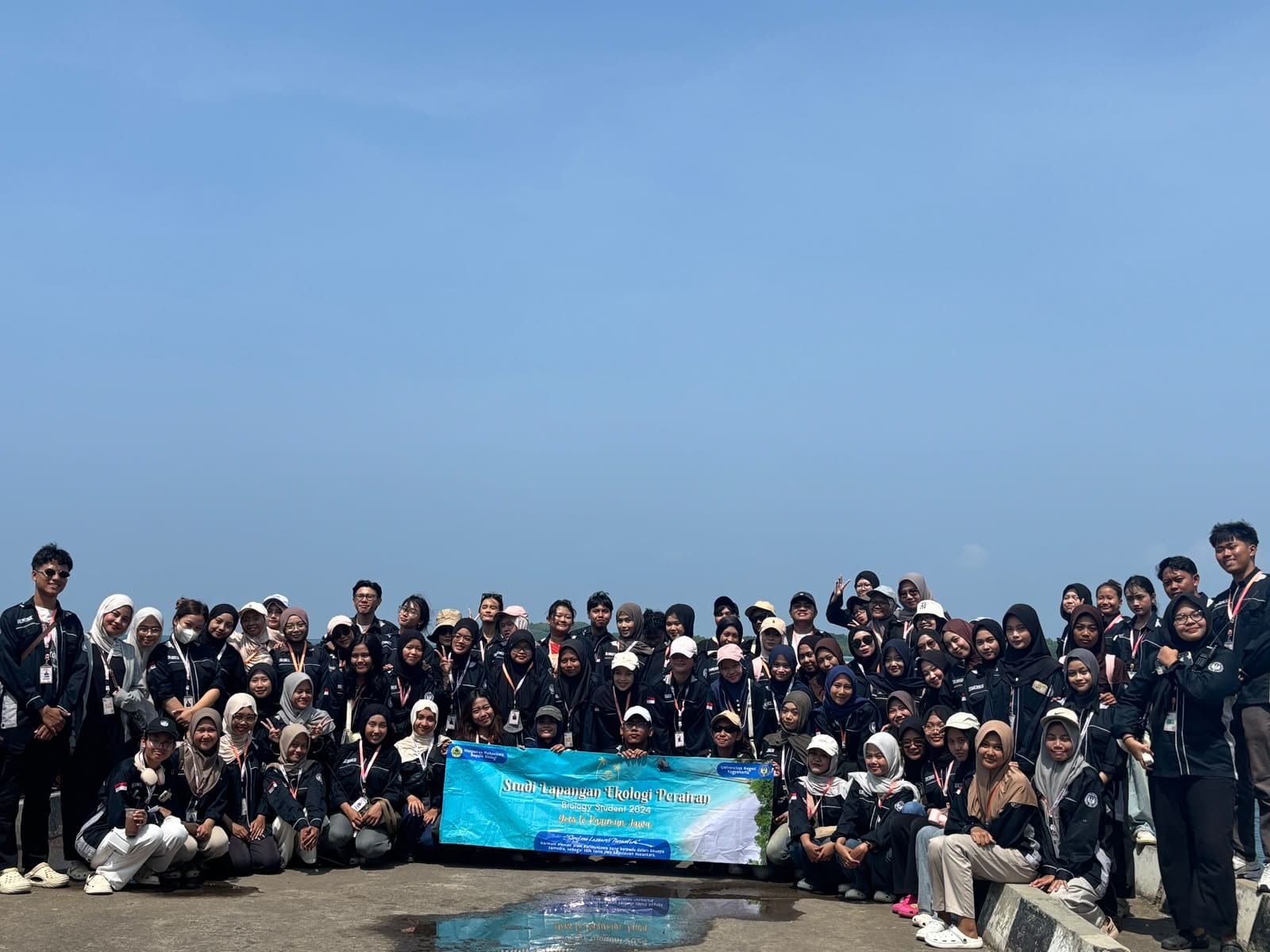
Yogyakarta - In late April 2026, students of the Undergraduate Biology Study Program, Department of Biology Education, Universitas Negeri Yogyakarta (UNY), conducted a field study and practical session for the Aquatic Ecology course at Karimunjawa National Park, Jepara, Central Java. During the program, students engaged directly in field observations to investigate marine ecosystems and their ecological dynamics. The activity involved 81 students from the 2024 cohort of the Undergraduate Biology Study Program. According to the course coordinators, Kuntum Febriyantiningrum, S.Si., M.Sc., and the teaching team, the field study was designed to strengthen student's ecological understanding, develop practical skills in aquatic environmental research, and provide firsthand experience in observing the interactions between biotic and abiotic components within marine ecosystems. The program also aimed to enhance student's awareness of the importance of community-based ecosystem conservation. Karimunjawa National Park was selected as the field study site for several strategic reasons. The marine waters surrounding the archipelago offer suitable conditions for ecological observation while allowing flexibility in response to changing weather conditions, particularly strong currents and seasonal winds. Since the islands are protected by an extensive marine park, field observations can be relocated to the eastern waters whenever strong westerly winds occur, ensuring safer conditions for data collection. Moreover, Karimunjawa National Park encompasses three major coastal and marine ecosystems that are central to the course objectives: mangrove forests, seagrass meadows, and coral reef ecosystems, including their associated reef fish communities. During the field study, students conducted ecological surveys using scientific sampling methods tailored to the characteristics of each ecosystem and the organisms being observed. Data collection in the mangrove ecosystem was carried out in the Kemujan Mangrove Forest, while surveys of the seagrass ecosystem were conducted along the coastal area of Ujung Gantungan Beach on Menjangan Besar Island. Observations of the coral reef ecosystem and reef fish communities were undertaken in the waters surrounding Menjangan Kecil Island. Beyond developing scientific knowledge and practical skills, the field study was intended to provide students with meaningful opportunities to understand and implement the principles of the United Nations Sustainable Development Goals (SDGs), particularly SDG 14: Life Below Water, which is closely aligned with the learning outcomes of the Aquatic Ecology course. The program concluded with the preparation of comprehensive field study reports, which constituted a major component of the course assessment. It is expected that this field experience will strengthen the competencies of Biology students as future researchers and educators in the fields of biology and environmental science. The activity also received strong support from the Karimunjawa National Park Authority. Representatives from SPTN I and SPTN II participated in the program by providing technical briefings and on-site guidance throughout the field activities. In the future, this collaboration is expected to continue providing students with valuable hands-on experience in biodiversity monitoring while contributing to the conservation and sustainable management of Indonesia's rich marine ecosystems.
Accreditation
