 Bahasa Indonesia
 English

Improving Student Practical Competencies through a Honeybee Cultivation Field Study in Magelang
Submitted by admin on Tue, 11/18/2025 - 14:59
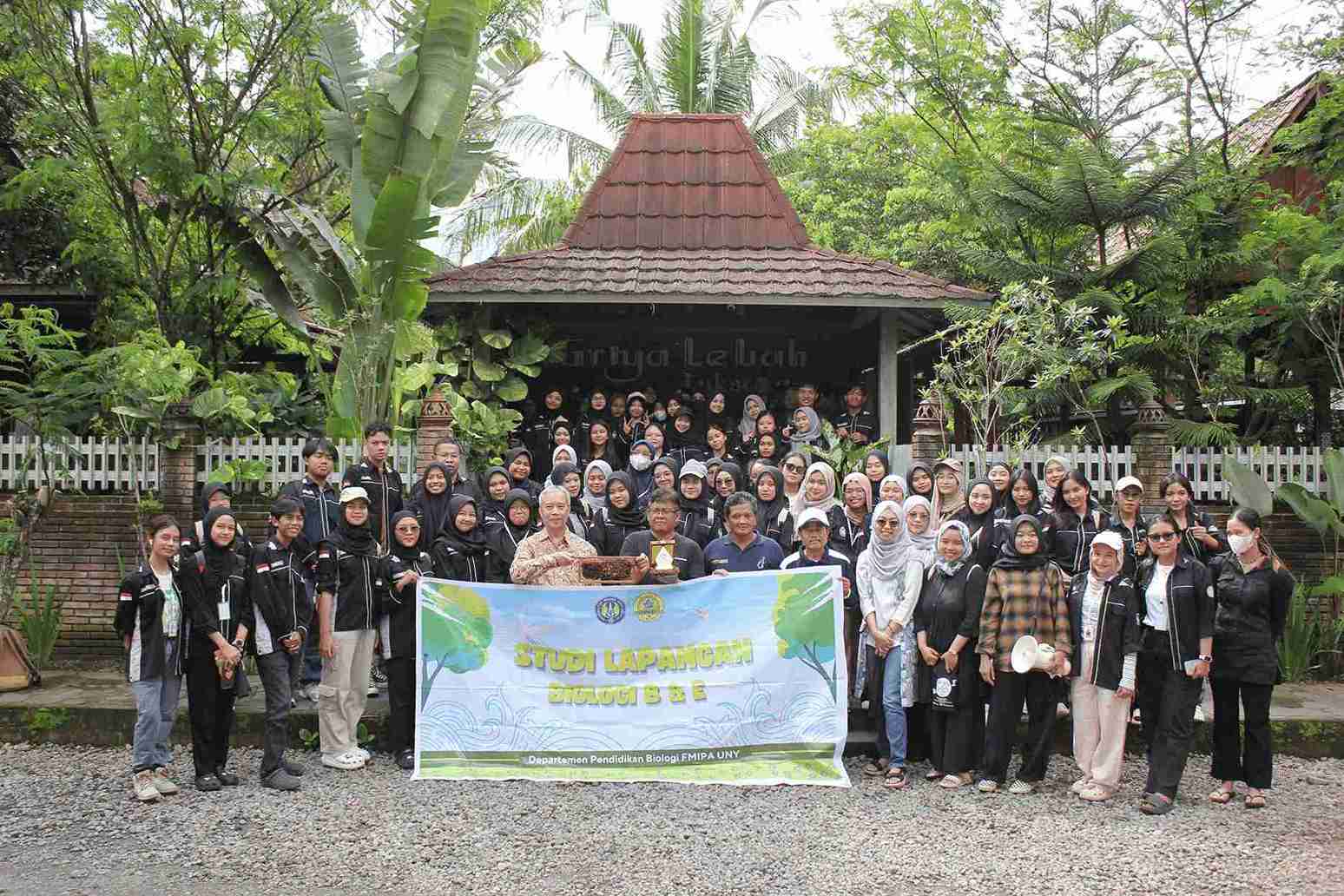
The Biology Study Program, Faculty of Mathematics and Natural Sciences, Yogyakarta State University (YSU), organized a Field Study on Animal Cultivation on Saturday, November 15, 2025, at Griya Lebah Tuksongo, Borobudur, Magelang. This activity was designed to give students direct, hands-on experience in honeybee cultivation as part of experiential learning.
Through this field study, students learned about the ecological importance of honeybees, the economic value of beekeeping products, and key stages of colony management that support sustainable beekeeping practices. During the initial session, students received an overview of honeybee species, colony structure and roles, hive preparation, colony establishment, site selection, and routine maintenance. The speaker also explained harvesting techniques for honey, propolis, and pollen, along with proper handling methods to maintain hygiene and product quality. This session provided essential background knowledge before students began their practical activities in the field.

The learning experience continued with hands-on practice at the apiary. Students observed colony conditions, arranged hive frames, checked brood development, and learned to recognize colony behavior patterns. They also practiced basic honey harvesting using simple equipment, allowing them to understand the production process from on-site activities to the early post-harvest stage. These activities helped students gain practical insight into the real challenges of beekeeping management.
Overall, the field study offered students a comprehensive understanding of honeybee cultivation from the perspectives of applied biology, conservation, and biological resource management. The Biology Study Program, Faculty of Mathematics and Natural Sciences, Yogyakarta State University (YSU), hopes that similar field-based learning activities will continue to be held regularly to strengthen student competencies, enhance practical skills, and foster greater awareness of biodiversity conservation and sustainability principles in beekeeping development.
Accreditation
